Tomorrow@Work – Cum arată schimbarea din perspectiva forței de muncă.
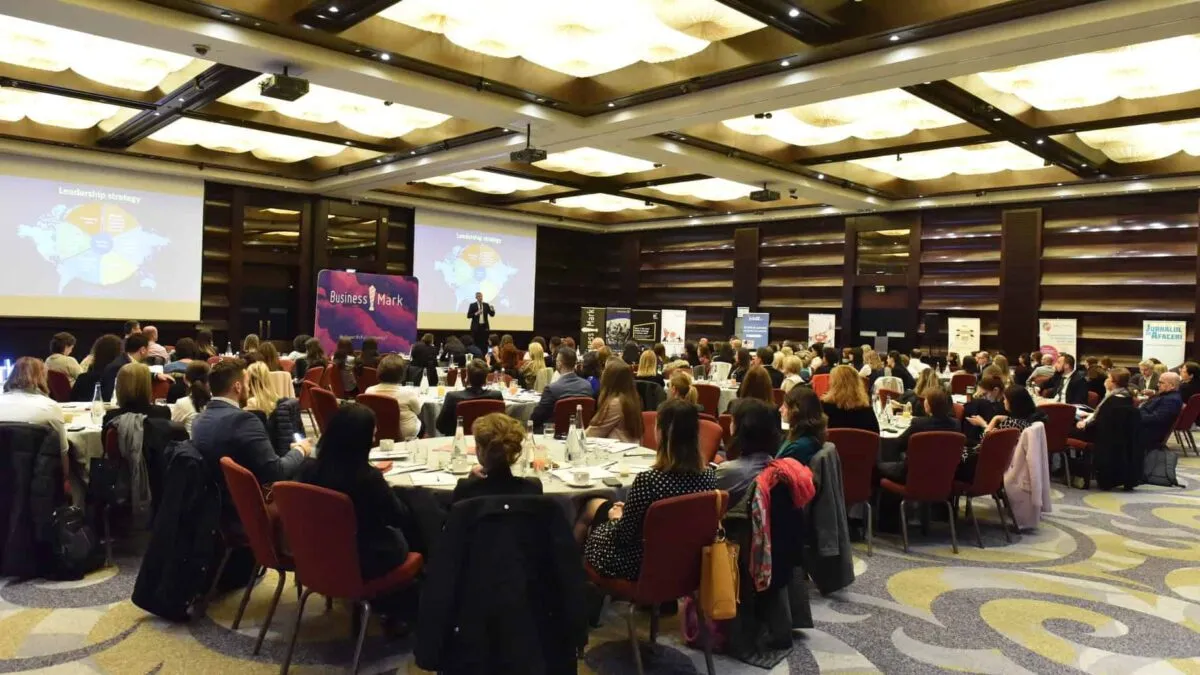
Source: Financiarul.ro.

Tomorrow@Work: Insights on Workforce Transformation
In an ever-evolving landscape, staying attuned to our surroundings is crucial. We must recognize factors that influence our lifestyles, careers, business models, and interpersonal dynamics, especially regarding technology. At Tomorrow@Work, we explored these themes concerning workforce adaptability to current and future changes.
Macro and Micro Perspectives on Change
Our discussions spanned both macro and micro levels, focusing on real-world scenarios. Joined by Andre de Wit, Dean of Leadership Academy Amsterdam, we examined the dynamics of change. He emphasized the necessity of aligning business strategies with leadership approaches, stating, „In a VUCA world, it’s vital to synchronize your leadership strategy with your business strategy. Companies must respond to their environment, and the HR department plays a crucial role in nurturing leadership within organizations.”
Understanding Generation Z‘s Impact
Continuing our holistic discussion, Andreea Mihnea, HR Director for Romania and Moldova at EY, highlighted the characteristics of Generation Z. This generation demands authenticity and transparency, consuming content primarily through social media. „They are independent and pragmatic, exhibiting distinct purchasing behaviors and seeking freedom,” she noted. The gig economy is increasingly prevalent, with a shift towards flexible, on-demand work. Current trends indicate a rise in contractors, with experts predicting a move towards more agile work models, including freelancers and chatbots. „When an employee leaves a company, 40% of the knowledge is lost,” Andreea added.
Embracing Change in the Workplace
Change is now the norm. Gabriela Neamțu, HR Manager at MOL Romania, reinforced this notion: „We are witnessing shifts in technology and employee expectations. Workers are choosing companies based on shared values. The HR department’s role is evolving from administrative to strategic, positioning us as business partners in creating competitive work environments.”
The Role of Data Management in HR
Regarding data management in HR, Aurelian Chitez, Sales Director at Romanian Software, shared insights: „In 2017, 57% of organizations stored their data in the Cloud, with 73% planning to migrate processes to the Cloud within two years.” He believes that automating workflows enhances efficiency and productivity while minimizing errors, ensuring compliance with evolving legislation.
Employee Satisfaction and Corporate Responsibility
Employee satisfaction is increasingly vital for employers. Evie Filissiadi, Country Manager at Marks & Spencer, emphasized that today’s employees value corporate involvement in CSR initiatives, continuous learning, and retention practices. „Employees are drawn to companies with a mission that contributes to community welfare. Employers should explore innovative methods to enhance productivity and employee development, benefiting both parties,” she stated.
Mentorship and Generational Integration
As we integrate new generations into the workforce, mentorship processes are becoming bi-directional. Sergio de la Calle Asensio, Head of Change Management at Telefonica, discussed the significance of role models within companies. „We can learn from anyone, regardless of their position. Today, junior professionals often mentor seniors, creating a mutually beneficial exchange of skills and experiences,” he explained.
Transformational Era: Focus on Specialization
In this transformational era, our guests discussed factors affecting companies, employees, and processes. Diana Bocăneală, Global Head of People Operations at Endava, noted, „There’s a growing need for specialization, with a shift in expectations from leaders. It’s no longer just about information transfer; it’s about changing behaviors.”
Strategic HR Practices Tailored to Business Needs
HR practices are becoming increasingly specialized based on business characteristics. Ileana Alexandru, HR Vice President at Mega Image, shared, „We focus on the strategic component of HR, allowing us to step away from execution. Engaging directly with employees in their environment yields valuable insights.”
Creativity and Personalization in HR
Modern employees require HR departments to be innovative and personalized. Sonia Bighiu, Talent Acquisition Leader at UiPath, stated, „In the competitive IT sector, it’s essential to understand colleagues’ needs and motivations. Customized benefits packages and the right tools foster retention and loyalty.”
Future Directions in Professional and Technological Evolution
Ruud Rikhof, Managing Partner at KENNEDYFITCH, discussed the societal evolution in professional and technological contexts. „Twelve years ago, society faced a turning point, focusing on crisis management while neglecting the gradual integration of technology,” he remarked.
Learning Processes Tailored to Business Models
Mădălina Cămărașu, Program Manager at UiPath, described their blended learning strategy, combining online resources with coaching and tailored experiences. „We prioritize mastery, autonomy, and purpose, especially during rapid growth,” she noted.
Addressing Resistance to Change
Judith Kis, HR Director at GROUPAMA Romania, discussed the importance of adopting change within organizations, considering employee wellness strategies. „In the employee lifecycle, engagement is crucial. Soon, management will shift from top-down to shared responsibilities,” she predicted.
Building a Cohesive HR Strategy
Robin Ellis, Global Talent Acquisition Leader at PURATOS, emphasized the need for aligning business growth strategies with HR objectives. The company has developed a global recruitment platform that also focuses on brand building.
Digitalization in HR Departments
Agnes Jongkind, Global Vice President of Human Resources at Deutsche Telekom, addressed the digitalization of HR departments. „Simply implementing tools won’t yield desired results; the underlying strategy is crucial,” she advised.
Future Job Dynamics and Communication Gaps
Oana Munteanu, Senior Manager at PwC Romania, highlighted ongoing concerns about future job interactions and the impact of machine economy processes. „We often overlook legislative instability and workforce shortages,” she cautioned.
Communication and Employee Retention
Andreea Suciu, Managing Partner at SUCIU | THE EMPLOYMENT LAW FIRM, noted that communication gaps often lead to employee turnover. „Last year, 70% of employee departures were attributed to direct supervisors. Offering flexibility can bridge communication with employees,” she suggested.
Promoting Flexibility and Transparency
Companies today are increasingly offering flexible work environments and encouraging personal passions. Florentina Taudor, General Director at RENANIA, shared, „We promote entrepreneurial spirit by allowing employees time to work on personal projects.” Transparency is also vital; Annemarie Fabian from BOOKSTER emphasized the importance of recognizing mistakes as learning opportunities.
Addressing AI Concerns
Carmen Neagu, Advisor on Strategy and Business Development at ENERGOBIT SA, expressed that regulatory concerns should take precedence over profit distribution in society.
This event was organized by BusinessMark, supported by Romanian Software, EY Romania, Signal Iduna, and AON Romania.
Official radio partner: Europa FM.
Supported by: BRCC, CCIRI, Zelist Monitor, and the Marketing Institute.
Media partners include: HR Portal, Business Journal, Manager Express, Financial Market, DeBizz, Transilvania Business, Market Watch, PRbox.ro, Signal Connect, National Courier, Management Portal, Entrepreneur in Romania, MoneyBuzz, Social Media Romania, Global Manager, Administratie.ro, BirouInfo.ro, Depozitinfo.ro, InfoOradea, Rbe Connect, Monitorul de Făgăraș, Spatiul Construit, MATEK, Financiarul.ro, Monitorul de Făgăraș, InTurda.ro, PRwave, Jobzz, LaJumate.ro, Business Press, Boulevard Magazine, IqAds, Smark, Clujul de Buzunar, Business24, and Ziare.com.